
Sandisk MP3 Player Manuals: A Comprehensive Guide
Discover essential resources for Sandisk MP3 players, including downloadable manuals in formats like .doc, .pdf, and .txt. Access warranty details and user guides!
Sandisk entered the portable music scene with innovative MP3 players, quickly gaining popularity for their compact designs and user-friendly interfaces. These devices offered a convenient way to carry and enjoy digital music collections. Understanding your Sandisk player begins with accessing the correct documentation. Manuals provide crucial information regarding operation, troubleshooting, and maximizing the device’s features.
Historically, Sandisk manuals were distributed in physical form with the product, but are now primarily available online. Locating these resources is vital for new users or those needing assistance with specific functions. Proper utilization of the manual ensures a seamless and enjoyable listening experience, covering everything from basic playback to advanced settings.
Historical Overview of Sandisk MP3 Players
Sandisk’s foray into MP3 players began with a focus on flash memory technology, offering alternatives to bulkier hard drive-based players. The Sansa line emerged as a prominent series, encompassing models like the Clip, Express, and Fuze. Early manuals reflected simpler functionalities, evolving alongside the devices’ increasing capabilities.
As technology advanced, Sandisk manuals incorporated sections on firmware updates, digital rights management (DRM), and expanded file format support. The availability of online manuals became crucial, allowing users to easily access updated information and troubleshooting guides. These resources mirrored the evolution of the players themselves, adapting to changing user needs and technological landscapes.
Popular Sandisk MP3 Player Models
The Sandisk Sansa Clip series, known for its compact size and clip-on design, consistently featured in user manuals emphasizing portability and ease of use. Sansa Express manuals detailed features like direct USB connectivity and expanded storage options. Sansa Fuze guides highlighted its touch-sensitive controls and customizable interface.
Manuals for these models typically covered basic operations, file transfer procedures, and troubleshooting common issues. Later iterations often included sections on accessing online music services and managing playlists. Understanding the specific features of each model was crucial, and the corresponding manuals served as essential companions for users.

Finding Sandisk MP3 Player Manuals
Locate manuals via the official Sandisk support website, third-party archives, or utilize effective search engine strategies for quick access to documentation.
Official Sandisk Support Website
The primary source for authentic Sandisk MP3 player manuals is the official Sandisk support website. This platform generally offers a dedicated section for product support, allowing users to search for documentation based on specific model numbers. Navigating the site typically involves entering the MP3 player’s model name or number into a search bar.
Results will often include downloadable PDF versions of the user manuals, providing detailed instructions on operation, troubleshooting, and specifications. Sandisk frequently updates its support resources, ensuring the availability of the most current information. Furthermore, the website may host FAQs, knowledge base articles, and software/firmware updates relevant to your device, enhancing the overall user experience and providing comprehensive assistance.
Third-Party Manual Archives
Beyond the official Sandisk website, several third-party online archives often host user manuals for older or discontinued MP3 player models. These repositories can be invaluable when the manufacturer’s site lacks specific documentation. Websites dedicated to preserving technical documentation or offering free downloads frequently include a collection of Sandisk manuals in various formats, such as PDF, DOC, and TXT.
However, users should exercise caution when downloading files from unofficial sources, verifying their legitimacy to avoid potential malware or corrupted files. Always scan downloaded documents with antivirus software before opening them. These archives represent a valuable resource, particularly for legacy devices, but require diligent verification of file safety.
Using Search Engines Effectively
Locating Sandisk MP3 player manuals via search engines requires strategic keyword usage. Combine “Sandisk,” the specific model name (e.g., “Sansa Clip”), and “manual” or “user guide” in your search query. Refine results by adding file type specifications like “PDF” or “DOC” to pinpoint downloadable documents directly. Utilize advanced search operators, such as quotation marks for exact phrase matching, to narrow down relevant results.
Explore image search for diagrams or quick start guides. Be mindful of website credibility; prioritize official support forums or reputable tech documentation sites. Filtering search results by date can help uncover recently archived manuals or updated information.

Understanding Manual Contents
Explore detailed instructions covering basic operations, user interface navigation, and efficient file management within your Sandisk MP3 player’s comprehensive documentation.
Basic Operation Instructions
Sandisk MP3 player manuals typically begin with fundamental power controls – locating the power button, turning the device on and off, and understanding any associated LED indicators. Users will find guidance on initial setup, often involving language selection and date/time configuration. Navigating the main menu is a core element, with instructions detailing button functions for browsing music libraries.
Manuals explain volume adjustment methods, headphone connection procedures, and how to initiate playback. Crucially, they detail charging procedures, including compatible chargers and expected charging times. Furthermore, instructions cover basic screen interactions, such as scrolling and selecting options. Understanding these initial steps is vital for a smooth user experience, ensuring effortless enjoyment of your digital music collection.
Navigating the User Interface
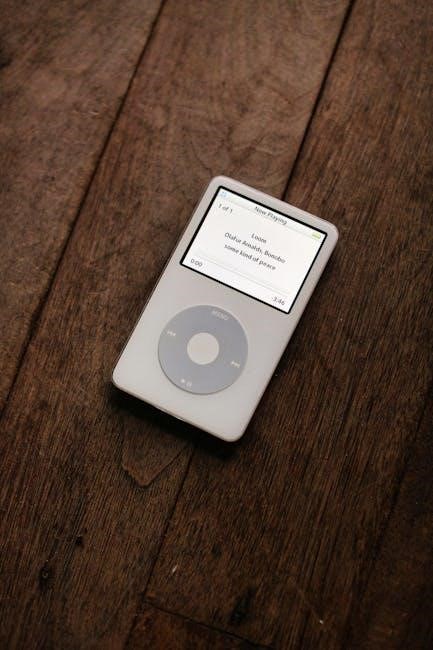
Sandisk MP3 player manuals dedicate significant sections to interface navigation. Users learn to utilize the control buttons – often a combination of a click wheel, directional pad, and select button – to move through menus. Manuals detail how to access music libraries, playlists, and settings. Understanding icon meanings is crucial; manuals provide visual guides to identify functions like shuffle, repeat, and equalizer settings.
The interface typically organizes music by artist, album, song, or genre. Instructions explain how to create and manage playlists for customized listening experiences. Furthermore, manuals cover accessing radio functionality (if available) and navigating recording options. Mastering the interface allows for efficient music management and personalized playback, enhancing the overall user experience.
File Management and Transfer
Sandisk MP3 player manuals thoroughly explain file management and transfer procedures. Typically, connecting the player to a computer via USB enables file transfer. Manuals detail how to access the device as a removable drive and copy music files. Supported formats – MP3, WMA, and others – are listed, alongside any limitations. Users learn to create folders for organization and delete unwanted files directly from the player or computer.
Instructions cover drag-and-drop functionality and utilizing media sync software. The manuals emphasize the importance of proper file naming conventions for optimal playback. Furthermore, they address potential issues like corrupted files and troubleshooting transfer errors, ensuring a smooth and efficient music loading process.

Troubleshooting Common Issues
Sandisk manuals offer solutions for power, connectivity, and sound problems. Find guidance on USB issues, device powering on/off, and resolving audio quality concerns.
Powering On/Off Problems
Encountering difficulties powering your Sandisk MP3 player on or off? The official manuals detail troubleshooting steps for unresponsive devices. First, ensure the player isn’t simply out of battery; connect it to a power source for a sufficient charging period – typically several hours. If it still fails to power on, consult the manual for potential reset procedures, often involving holding the power button for an extended duration.
Manuals also address scenarios where the player powers on briefly then shuts off, potentially indicating a battery issue or firmware glitch. Check for firmware updates, as these can resolve power management problems. Furthermore, the guides explain how to perform a hard reset, which can sometimes resolve persistent power-related issues. Always refer to your specific model’s manual for accurate instructions, as procedures vary.
Connectivity Issues (USB)
Experiencing problems connecting your Sandisk MP3 player to a computer via USB? The manuals provide detailed guidance for resolving these issues. Begin by verifying the USB cable is securely connected to both the player and the computer. Try a different USB port on your computer, as some ports may have limited power output.
Consult the manual for specific driver requirements; some models necessitate installing dedicated drivers for proper recognition. If the player appears as an unrecognized device, the manual outlines troubleshooting steps, including checking Disk Management on Windows. Ensure the player is in the correct USB mode (MSC or MTP) as specified in the guide. Firmware updates can also address connectivity bugs, so check for available updates.
Sound Quality Problems
Encountering diminished sound quality with your Sandisk MP3 player? The manuals offer solutions to optimize your listening experience. First, verify the volume level on both the player and connected headphones or speakers. Check the audio file format; some formats may have lower bitrates resulting in reduced fidelity.
Explore the equalizer settings within the player’s interface, as described in the manual, to adjust frequencies and enhance specific sounds. Ensure your audio files aren’t corrupted. Consider trying different headphones to isolate whether the issue lies with the player or the audio output device. Firmware updates often include audio enhancements, so check for those too.
Specific Model Manuals & Features
Find dedicated guides for Sandisk Sansa Clip, Express, and Fuze models, detailing unique features and operational instructions for each device.
Sandisk Sansa Clip Manuals
Sandisk Sansa Clip manuals provide comprehensive instructions for operating this popular, compact MP3 player. These guides detail basic functions like powering the device on/off, navigating the user interface, and managing your music library. Users can learn how to transfer files via USB connection, customize equalizer settings for optimal sound quality, and create playlists to organize their favorite tracks.
Specific manuals often address troubleshooting common issues, such as connectivity problems or difficulties with file format compatibility. Detailed explanations of the Clip’s features, including its clip-on design for portability and its simple button controls, are readily available. Downloadable versions are typically found on the official Sandisk support website or through third-party archive sites, offering convenient access to information.
Sandisk Sansa Express Manuals
Sandisk Sansa Express manuals offer detailed guidance for users of this versatile MP3 player. These resources cover essential operations, including power management, file transfer protocols utilizing USB connectivity, and navigating the intuitive user interface. Users will find instructions on creating and managing playlists, customizing audio settings via the equalizer, and understanding supported file formats like MP3 and WMA.
Troubleshooting sections address common issues, such as connectivity problems or sound quality concerns. The manuals also explain the device’s features, including its compact design and ease of use. Accessible through the official Sandisk support website and various online archives, these guides ensure a smooth user experience.
Sandisk Sansa Fuze Manuals
Sandisk Sansa Fuze manuals provide comprehensive instructions for operating this popular MP3 player model. These guides detail fundamental functions like powering the device on and off, transferring music and other media files via USB, and effectively navigating the user interface. Users can learn to create customized playlists, adjust equalizer settings for optimal sound, and understand compatible audio formats.
Troubleshooting sections address common problems, such as connectivity issues or poor audio quality. The manuals also cover essential safety precautions and maintenance tips to prolong the device’s lifespan. Accessible online, these resources ensure a user-friendly experience with the Sansa Fuze.

Software and Firmware Updates
Regular updates enhance performance and fix bugs; Download and install firmware carefully, noting potential risks, to maintain optimal functionality of your Sandisk MP3 player.
Downloading and Installing Updates
Ensuring your Sandisk MP3 player operates at its best often requires installing the latest software and firmware updates. These updates are typically available through the official Sandisk support website, though occasionally, third-party archives may host older versions. Before downloading, carefully verify the file’s authenticity to avoid malware.
The installation process usually involves connecting your MP3 player to a computer via USB. Follow the on-screen instructions provided with the update file. It’s crucial to avoid disconnecting the device during the update, as this could potentially brick the player. Always back up any important data before initiating an update, as a precaution against unforeseen issues. A stable power source is also recommended throughout the entire process.
Benefits of Firmware Updates
Firmware updates for your Sandisk MP3 player deliver a multitude of enhancements. These improvements often include bug fixes that resolve operational glitches, leading to a smoother user experience. Updates can also introduce new features, expanding the player’s functionality and capabilities. Performance optimization is another key benefit, resulting in faster processing speeds and improved responsiveness.
Furthermore, firmware updates frequently enhance file format compatibility, allowing you to play a wider range of audio files. Security patches are also commonly included, protecting your device from potential vulnerabilities. Regularly updating your Sandisk MP3 player ensures it remains reliable, secure, and performs optimally, maximizing your enjoyment of your music library.
Potential Risks of Updates
While firmware updates generally improve Sandisk MP3 player performance, potential risks exist. An interrupted update process – due to power loss or connection issues – can render the device unusable, effectively “bricking” it. Occasionally, updates may introduce unforeseen bugs or compatibility issues with certain file formats or accessories.
It’s crucial to ensure a stable power source during the update and avoid disconnecting the player. Backing up important files before updating is highly recommended to prevent data loss. Though rare, a faulty update file could also cause problems. Carefully follow the official Sandisk instructions and proceed with caution to minimize these risks and maintain device functionality.
Warranty Information & Support
Understand your Sandisk MP3 player’s warranty terms and explore available repair or replacement options. Contact Sandisk support for assistance and guidance!
Understanding the Warranty Terms
Carefully review the warranty card included with your Sandisk MP3 player, as it details the specific coverage provided. Generally, warranties cover defects in materials and workmanship under normal use for a defined period, often one year from the date of purchase.
However, the warranty typically does not cover damage resulting from misuse, accidents, unauthorized modifications, or normal wear and tear. Proof of purchase is essential to validate any warranty claim.
It’s crucial to register your device, if prompted, to streamline the support process. Familiarize yourself with the exclusions and limitations outlined in the warranty documentation to ensure you understand your rights and responsibilities as a consumer. Retain your original purchase receipt for warranty service.
Contacting Sandisk Support
For direct assistance with your Sandisk MP3 player, begin by visiting the official Sandisk support website. Look for a “Contact Us” or “Support” section, which typically offers various options, including online chat, email submission forms, and a knowledge base with frequently asked questions.
While specific contact details may evolve, the website remains the primary channel for reaching Sandisk’s customer service team. Be prepared to provide your device’s model number and a detailed description of the issue you are experiencing.
Consider checking online forums and communities dedicated to Sandisk products, where other users may have encountered and resolved similar problems. Remember to have your proof of purchase readily available.
Repair and Replacement Options
If your Sandisk MP3 player is malfunctioning and beyond simple troubleshooting, explore repair and replacement options. First, verify your warranty status; a valid warranty may cover repair costs or provide a replacement unit. Sandisk’s official support website details the warranty terms and procedures for submitting a claim.
Outside of the warranty period, authorized repair centers may offer paid repair services. However, due to the age of many Sandisk MP3 players, finding repair services can be challenging. Consider the cost of repair versus the price of a new device.
Replacement is often the most practical solution for older models. Sandisk may not directly offer replacements for discontinued products, but exploring online marketplaces for refurbished units is an option.
Advanced Features & Settings
Explore equalizer adjustments, playlist creation, and radio functions (where available) within your Sandisk MP3 player’s settings for a customized listening experience.
Equalizer Settings
Sandisk MP3 players often include customizable equalizer settings, allowing users to fine-tune the audio output to their preferences. These settings typically offer preset options like “Rock,” “Pop,” “Classical,” and “Jazz,” each designed to enhance specific music genres.
Beyond presets, many models provide manual control over frequency bands, enabling precise adjustments to bass, mid-range, and treble levels. Consult your device’s manual to understand the available bands and their impact on sound. Experimenting with these settings can dramatically improve the listening experience, compensating for headphone characteristics or personal hearing preferences. Proper equalization can bring out subtle details in your music, creating a richer and more immersive soundscape.
Playlist Creation and Management
Sandisk MP3 players facilitate organizing your music library through playlist creation and management. Manuals detail how to create new playlists, typically allowing you to add songs individually or in batches. Most models support multiple playlists, enabling categorization by genre, mood, or artist.
Playlist management features often include the ability to rename, reorder, and delete playlists. Some players offer automatic playlist generation based on criteria like most played songs or recently added tracks. Refer to your specific model’s manual for detailed instructions on utilizing these features, maximizing your listening enjoyment and streamlining music access.
Radio Functionality (if applicable)
Certain Sandisk MP3 player models, like some Sansa variants, incorporated FM radio functionality. Manuals for these devices provide detailed instructions on accessing and utilizing the radio feature. This typically involves connecting headphones, which act as the antenna, for optimal reception.
Users can usually scan for available stations, save presets for quick access to favorites, and adjust radio settings within the player’s interface. The manual will explain any limitations, such as regional frequency support. If your Sandisk player includes radio, the manual is crucial for understanding its operation and troubleshooting potential reception issues.

File Format Compatibility
Sandisk MP3 players generally support common formats like MP3 and WMA; some models may handle images or videos, with format limitations detailed in manuals.
Supported Audio Formats (MP3, WMA, etc.)
Sandisk MP3 players prioritize widespread audio format compatibility to ensure a versatile listening experience. The universally recognized MP3 format is consistently supported across all models, offering broad accessibility. Windows Media Audio (WMA) is also a standard inclusion, providing efficient compression and good sound quality. However, specific Sandisk models may extend support to additional formats.
Consulting the user manual for your particular device is crucial to confirm complete format support. Some players might accommodate formats like AAC, FLAC, or WAV, though this varies. Understanding these capabilities allows users to optimize their audio libraries for seamless playback on their Sandisk device, maximizing enjoyment and minimizing compatibility issues.
Image and Video Support (if applicable)
Sandisk MP3 player image and video capabilities are model-dependent, with earlier or more basic devices typically focusing solely on audio playback. Later models, like certain Sansa variants, introduced limited support for viewing images, commonly in JPEG format. Video playback functionality, when present, generally supports lower-resolution formats like MPEG-4 (.mp4).
However, it’s vital to consult your specific player’s manual. Support for video, and the resolutions/codecs accepted, varies significantly. Storage capacity also plays a key role; video files demand considerably more space than audio. The user manual details any limitations regarding file size or format compatibility, ensuring optimal performance and preventing playback issues.
Limitations of File Formats
Sandisk MP3 players, while supporting popular formats like MP3 and WMA, often have limitations. High bit-rate MP3s might strain older models, causing stuttering or skipping. WMA compatibility can be version-specific; some players may not support newer WMA codecs. Image formats are usually limited to JPEG, and video support, if available, typically restricts resolutions and codecs to MPEG-4.
The user manual details these restrictions. Attempting to play unsupported formats can result in errors or no playback at all. File size limitations also exist, dictated by the player’s storage capacity and file system. Understanding these constraints ensures a smooth and enjoyable listening experience.
Safety Precautions and Maintenance
Prioritize battery safety, avoid extreme temperatures, and clean your Sandisk MP3 player with a soft cloth. Protect it from damage and moisture!
Battery Safety Guidelines
Understanding your Sandisk MP3 player’s battery is crucial for longevity and safe operation. Always use the provided charger or a certified equivalent to avoid damaging the battery or creating a potential fire hazard. Avoid exposing the device to extreme temperatures, as both heat and cold can negatively impact battery performance and lifespan.
Never attempt to disassemble or modify the battery pack. Improper handling can lead to leakage, overheating, or even explosion. If you notice any signs of battery damage, such as swelling, leaking, or unusual odor, discontinue use immediately and consult Sandisk support for guidance. Proper disposal of batteries is also essential; follow local regulations for recycling electronic waste.
Cleaning and Storage
Maintaining your Sandisk MP3 player’s pristine condition requires regular cleaning and proper storage. Use a soft, dry cloth to gently wipe the device’s exterior, avoiding abrasive cleaners or liquids. For stubborn smudges, slightly dampen the cloth with water, ensuring no moisture enters any openings.
When storing your MP3 player for extended periods, power it off completely and store it in a cool, dry place, away from direct sunlight and extreme temperatures. A protective case is recommended to prevent scratches and dust accumulation. Avoid storing the device with other metallic objects that could cause short circuits. Regular care ensures lasting enjoyment!
Avoiding Damage to the Device
Protecting your Sandisk MP3 player from damage is crucial for its longevity. Avoid dropping or subjecting the device to strong impacts, as this can cause internal component failure. Keep it away from liquids, as moisture can lead to corrosion and short circuits.
Do not attempt to disassemble the MP3 player yourself, as this will void the warranty and potentially cause irreparable harm. Avoid exposing the device to extreme temperatures or direct sunlight for prolonged periods. Use only the recommended accessories and cables to prevent damage to the ports. Careful handling ensures reliable performance!